The Eight Fundamentals of Accurate Shooting. 8 series
Instruktor

PSDinfo Academy
Czas trwania
38 min
Poziom
Niski
Lokalizacja
Na zewnątrz
In this course, we begin with the most important characteristic — shooting accuracy. Accuracy is based on executing a precise shot, and a precise shot, in turn, consists of several fundamental elements. We can identify eight main points that determine shot precision. Let us examine them one by one. The eight fundamentals of accurate shooting (the precise shot). These eight interconnected factors form the foundation of precision-fire technique. Regardless of the situation, the shooter must pay attention to each of them. These eight points form the basis for executing a precise shot. If you memorize them and use them consistently, they will help you conduct self-diagnostics and identify what needs improvement. Misses or issues can usually be linked to one of these points: for example, bullet spread on the target may indicate mistakes in grip or trigger control; a shift in the mean point of impact may point to errors in aiming; increasing tremors may signal fatigue and issues with stance or breathing, and so on. Understanding this, a shooter can analyze their actions after firing and make the right decisions for correction: return to basic stance exercises, work on smooth trigger control, adjust breathing, and so on.
Wymagany sprzęt
Tematy
- 7
- 10
- 26
Ćwiczenia
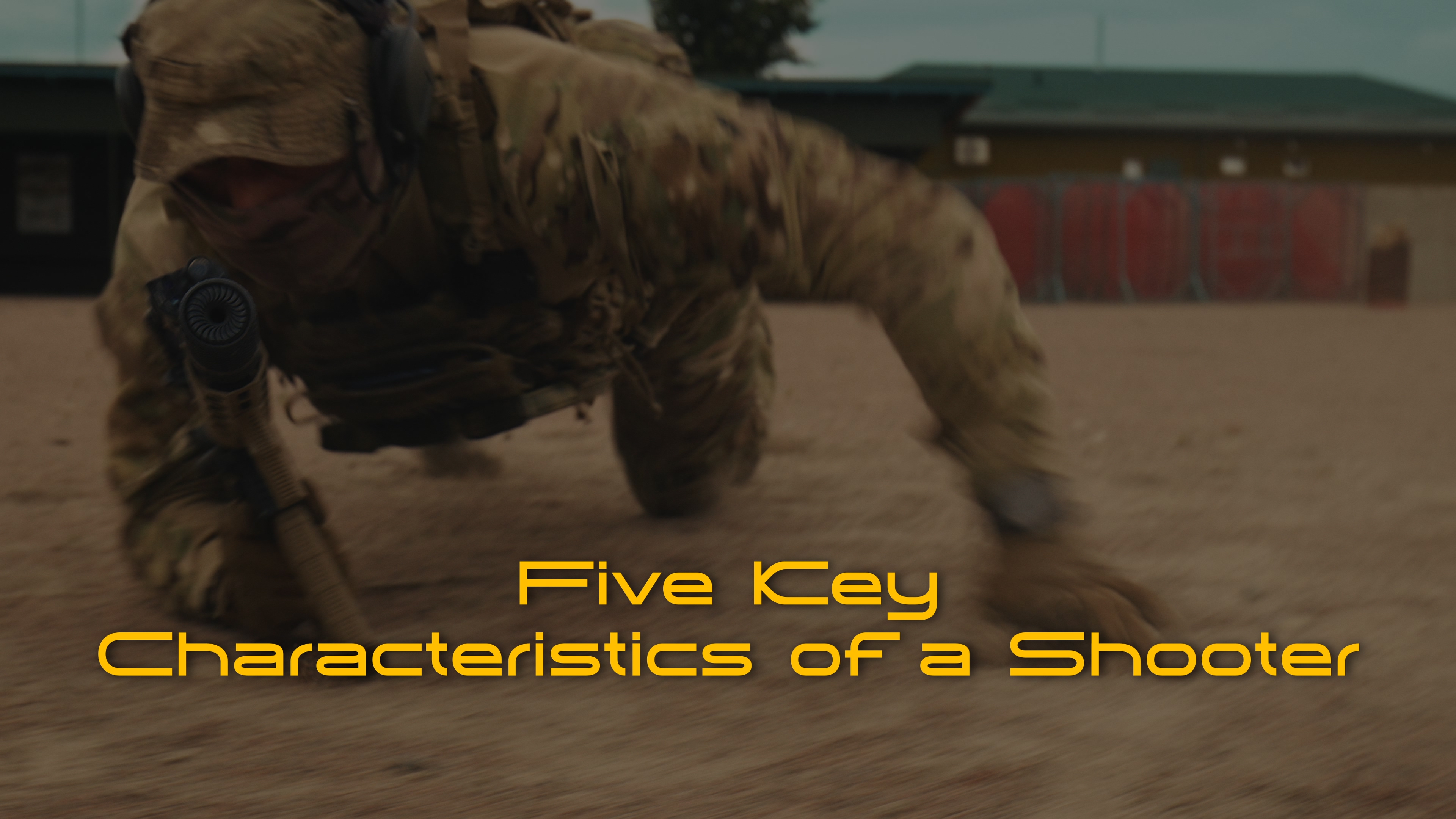
2.1 Five Fundamental Characteristics of a Shooter
In this video, we transition to forming the fundamental understanding that lies at the core of firearms training. Once a shooter has mastered the basic weapon-handling procedures, an essential question arises — how to define the next steps of development. We outline the primary goal of firearms training: the conscious, controlled delivery of ammunition into the chosen target — whether in combat, on the range, or during a precision shooting exercise. The video then explains five key characteristics that determine a shooter’s level of proficiency.
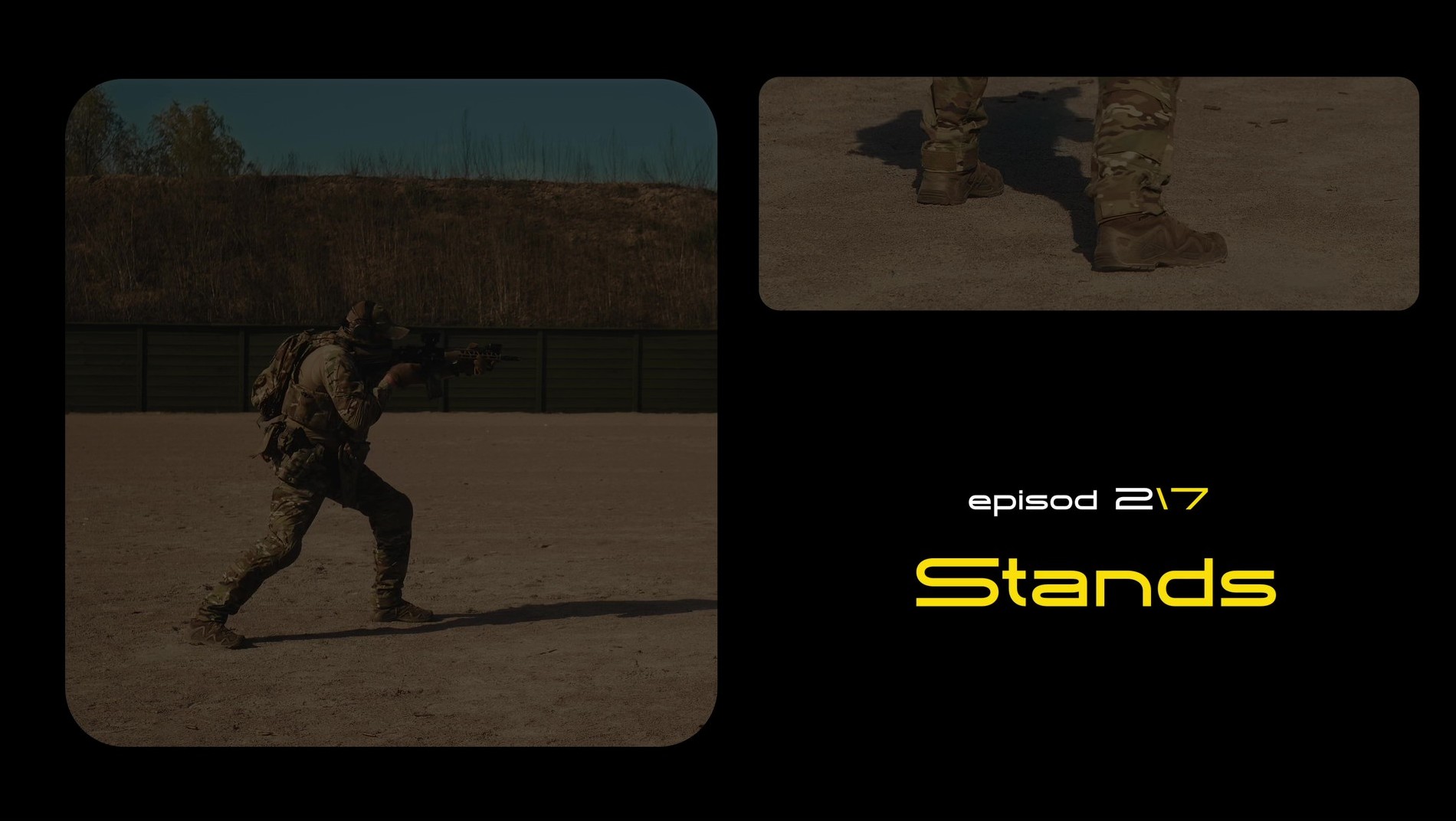
2.2 Shooting Stance. “A proper stance is the foundation of your shot.”
In this lesson, the instructor reveals one of the essential foundations of accurate shooting — developing a correct and stable shooting stance. You will learn why the stance is the base of every shot and how its quality determines your accuracy, recoil control, and the speed of all follow-up actions. You will discover the difference between narrow, unstable stances and deep, powerful stances that create a strong foundation for managing high-impulse recoil, even with heavy calibers.
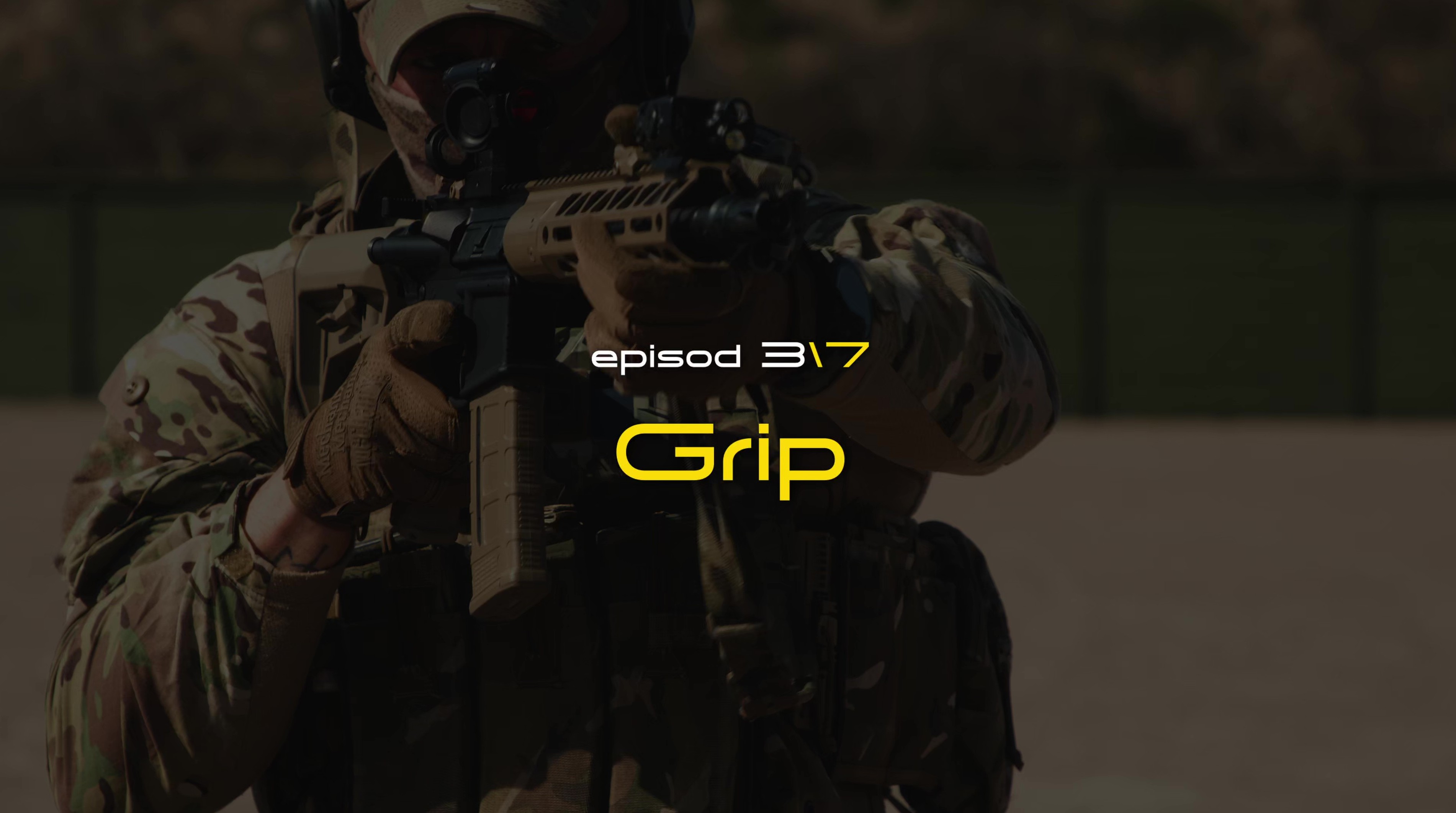
2.3 Weapon Grip. Hand Positioning and Grip Strength
In this lesson, the instructor reveals the key principles of a proper shooting grip — one of the most critical elements of stable and accurate shooting. You will learn why the shooting hand is not the primary hand for weapon control, and why the support hand provides up to 80% of the stabilization and directional control. The instructor explains in detail how to form the three essential points of control: the shoulder weld, the shooting-hand position, and the support-hand grip. You will learn how to minimize the negative effects of imperfect gear, how to maintain proper weapon elevation to your eyes, and how consistent pressure into the shoulder helps compensate for suboptimal equipment or firing positions.
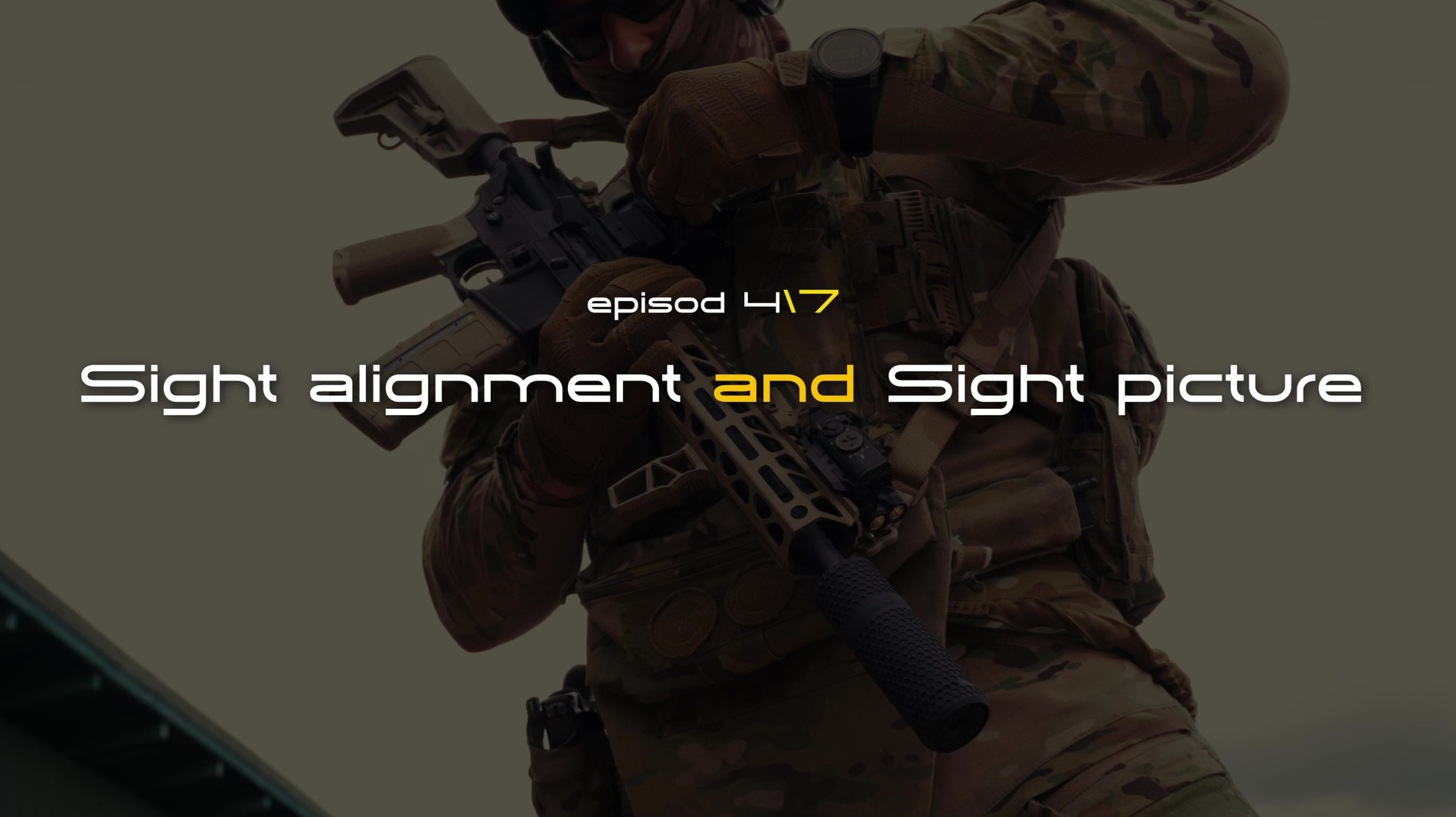
2.4 Principles of Forming the Aiming Line and a Proper Sight Picture
In this lesson, the instructor reveals the fundamental principles of forming an aiming line and a proper sight picture — essential elements for achieving consistent shooting accuracy. You will learn why a correctly aligned sighting system is more critical than a perfect stance or grip, and how even minor misalignments between sights result in large deviations on the target. The instructor explains how to work with various types of sights — from mechanical diopter and open sights to red-dot, optical, and thermal sights. You will learn how to align the three key points into a single straight line: your eye, the sighting mark, and the aiming point on the target. Special attention is given to parallax effects and how improper placement of the reticle inside a red-dot sight can significantly impact accuracy.
2.5 Breath Control During Shooting
In this lesson, the instructor reveals one of the most important components of accurate shooting — breath control. You will learn how the three primary breathing cycles used in shooting — sniper, marksman, and fast-shooter breathing — influence stability, sight clarity, and shot precision. The instructor explains why breathing is the fifth of the eight principles of precision shooting and how each breathing cycle should be used depending on distance, body position, and shooting tempo.
2.6 Principles of Trigger Control
In this lesson, the instructor reveals the principles of proper trigger control — one of the most critical components of accurate shooting. You will learn how finger placement on the trigger and the mechanics of the press directly influence bullet trajectory, as well as which common mistakes cause groups to shift left or right. The instructor explains why inserting the finger too deeply into the trigger guard pulls the weapon to the right, while using only the fingertip pushes it to the left. You will learn how these deviations become especially noticeable when working with precision rifles, where even the smallest finger movements can cause significant misses.
2.7 Follow-Through
In this lesson, the instructor reveals the seventh principle of accurate shooting — follow-through, the art of managing recoil after the bullet has already left the barrel. You will learn why shooting does not end the moment the trigger breaks and how proper follow-through ensures stability for all subsequent shots. The instructor explains how residual gas pressure affects the bullet and why every firearm has its own recoil signature — straight back, upward, or a combination of both, depending on the operating system and rifling direction. You will learn how these variations influence the point of impact, even after the round exits the muzzle.
2.8 The Eighth Principle of Precision Shooting — Recovery.
In this lesson, the instructor reveals the final, eighth principle of accurate shooting — recovery, the process of rebuilding all shooting fundamentals to prepare for the next accurate shot. You will learn that true shooting mastery is not defined by a single perfect shot, but by the ability to repeat that shot consistently. The instructor explains that once recoil is managed and the weapon returns to the sight line, the shooter must rapidly run through all key fundamentals — from stance to trigger control.