Maneuver. 10 series
Инструктор

PSDinfo Academy
Продолжительность
72 мин
Уровень
Средний / Высокий
Локация
На улице
Shooter training is often conducted in far-from-ideal conditions (rain, strong wind, etc.), as overcoming such obstacles makes a soldier stronger and more resilient. Today’s topic, “Maneuver,” covers a set of skills aimed at increasing a shooter’s effectiveness in combat. The concept of maneuver includes two interconnected components: maneuvering with fire and maneuvering as a shooter. Together, these elements enable the shooter to react quickly to changing situations, engage targets in various conditions, and maintain personal safety. Training objective: To develop the skills of maneuvering with fire and adjusting shooting positions in order to improve target engagement accuracy and enhance the shooter’s survivability on the battlefield. The topic consists of two parts: Fire maneuver – shifting fire (re-aiming the weapon) across different directions and distances, as well as adjusting the rate of fire. Shooter maneuver – the shooter’s actions to change their position or posture in order to maintain tactical advantage in combat.
Необходимое снаряжение
Темы
- 4
- 5
- 8
- 15
- 18
- 21
- 22
- 24
Упражнения
Episode 6.1 Maneuver: By Fire and Shooter
In this episode, the instructor presents one of the most complex topics in modern firearms training — maneuvering. You will learn how to move on the battlefield without losing control over your fire, maintaining tempo, accuracy, and tactical advantage. The instructor breaks down two key components: fire maneuvering (shifting fire along the front, in depth, and by tempo) and shooter maneuvering (changing positions, shooting on the move, clearing malfunctions). The training includes an expanded set of exercises — 3 practical, 3 training, and 1 control drill — creating a complete system to develop maneuverability. To increase the challenge, the instructor works without a sling to demonstrate effective weapon control in dynamic and adverse conditions.
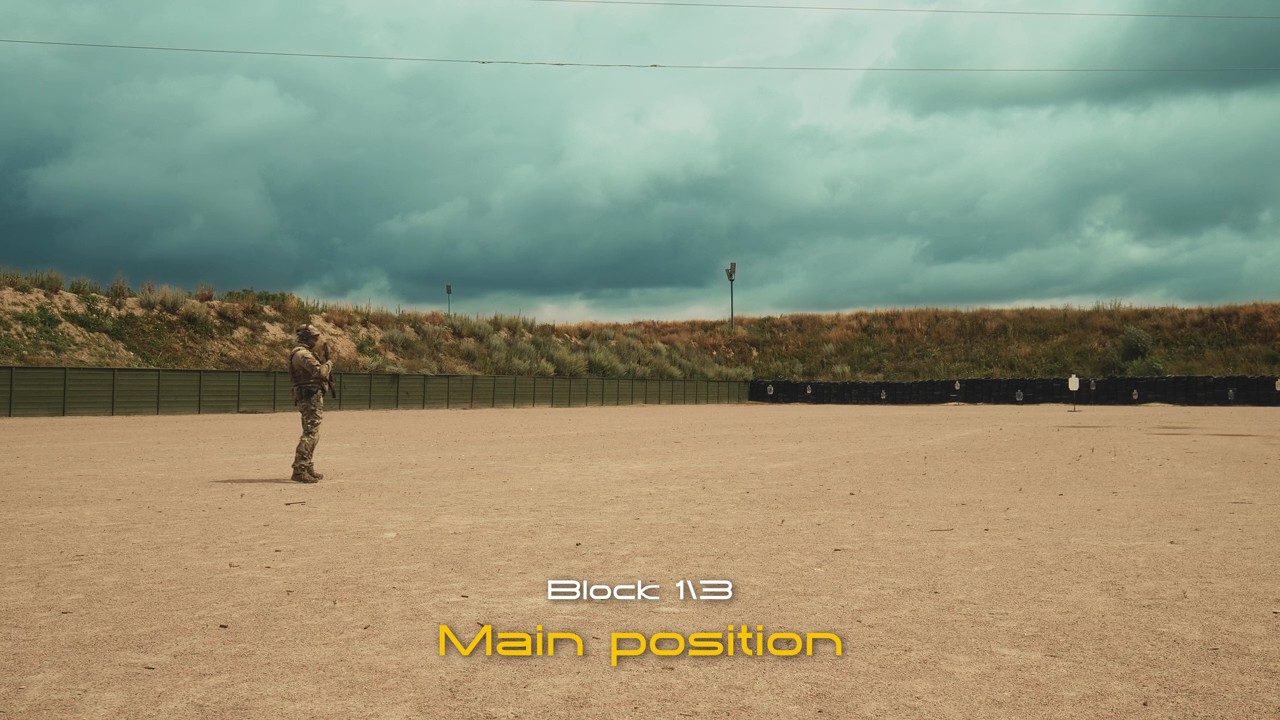
6.2 "Acrobatics - main positions"
In this episode, we move into a fundamental but critically important area — shooting positions. We’ll train across three blocks of five stances each. Some will repeat, but the goal is to build stability, precision, and speed when transitioning between them. From frontal standing to prone, from classic kneeling to high and low kneeling — each position has a tactical purpose. You’ll learn how to assume them quickly, correctly, and effectively. We simulate scenarios where you have to shoot from cover, through vegetation, or in complex tactical settings. Your task: hit the target from each position. One magazine, fifteen stances, full focus. It’s not about speed — it’s about precision. Train your body, your weapon, and your mindset.
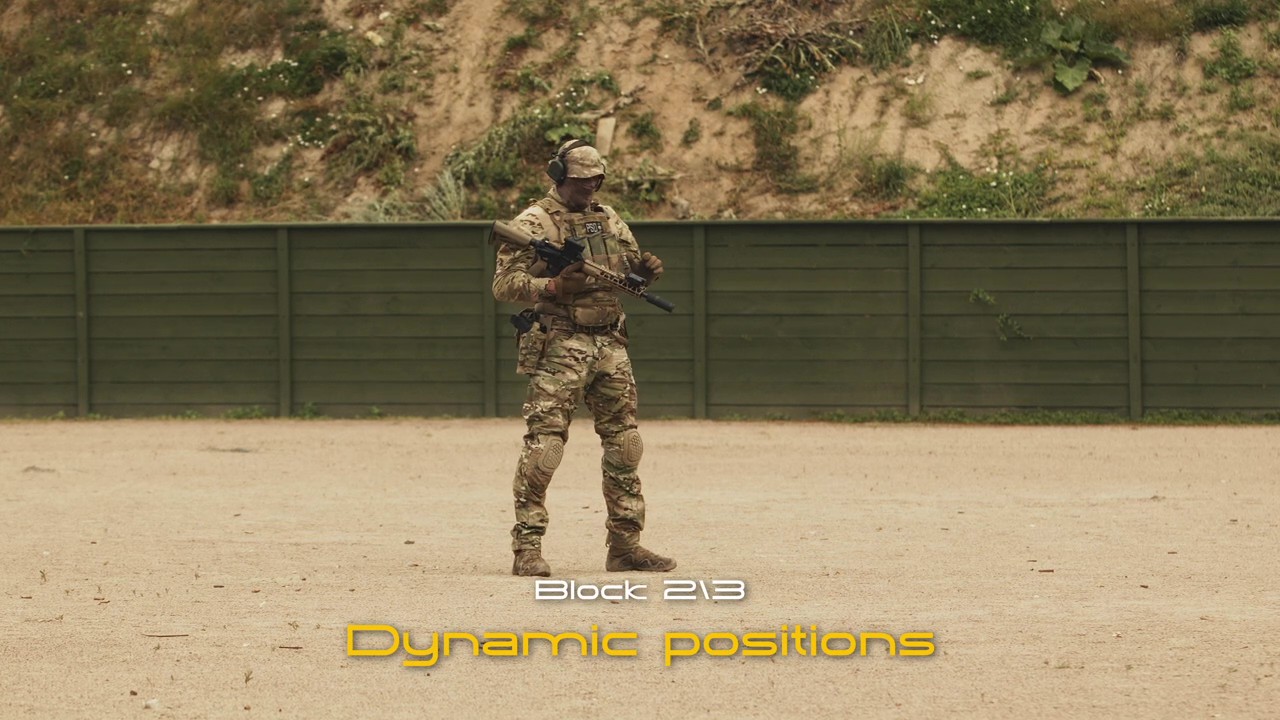
6.3 Movement in the prone position
In this block, the instructor demonstrates shooting from the “hunter’s position” — a refined version of the frontal prone stance aimed at improving accuracy during heavy breathing. You will learn how to minimize the impact of body movement on your weapon by slightly adjusting your posture, and how to shift while lying down without breaking orientation toward the enemy. The instructor explains why even a 1-meter shift can be critical for survival under automatic fire.
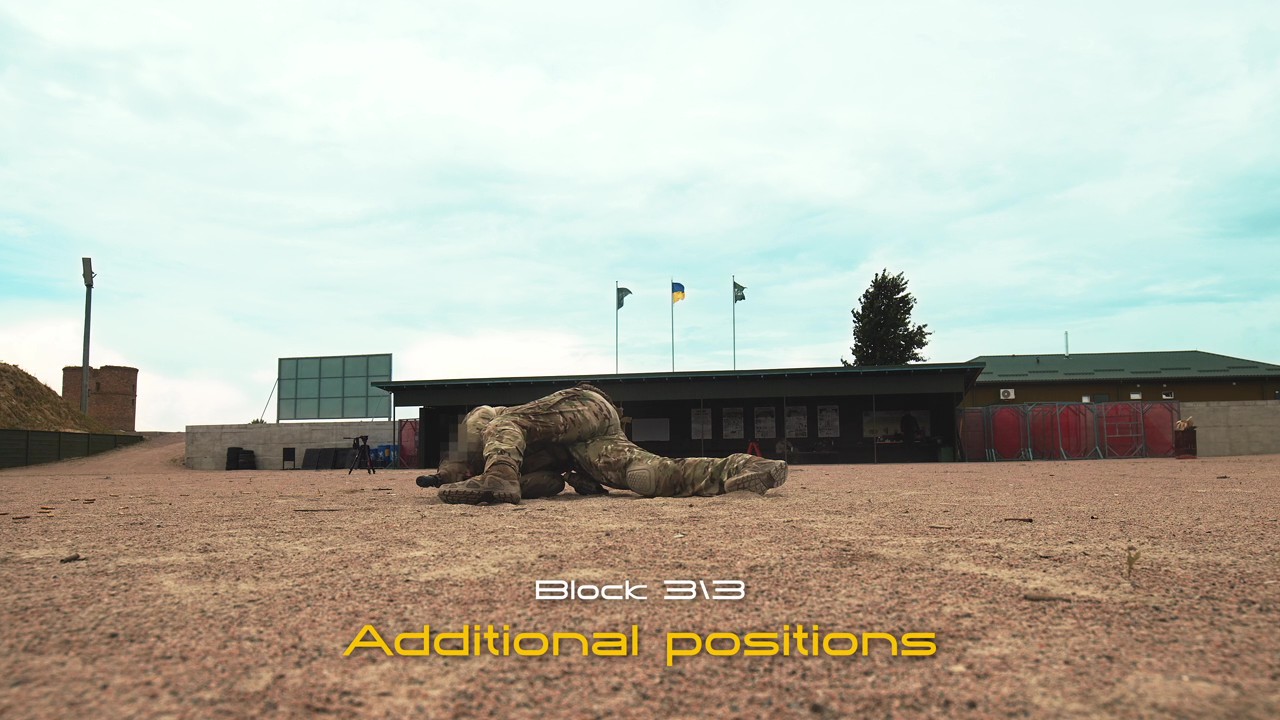
6.4 "Unconventional low-profile positions"
In this video, the instructor demonstrates critical shooting skills from unconventional positions—specifically while lying on your back, or on your right or left side. You’ll learn how to reduce your visual profile in combat using the “Afghan squat,” how to transition safely to supine or lateral positions while maintaining control of your weapon and field of fire. The instructor explains in detail how to train for combat scenarios where the environment dictates your position—not your comfort. You’ll see how to preserve shooting accuracy and weapon reliability while fully grounded, and how to test your gear for true combat durability.
6.5 Basic realod drill
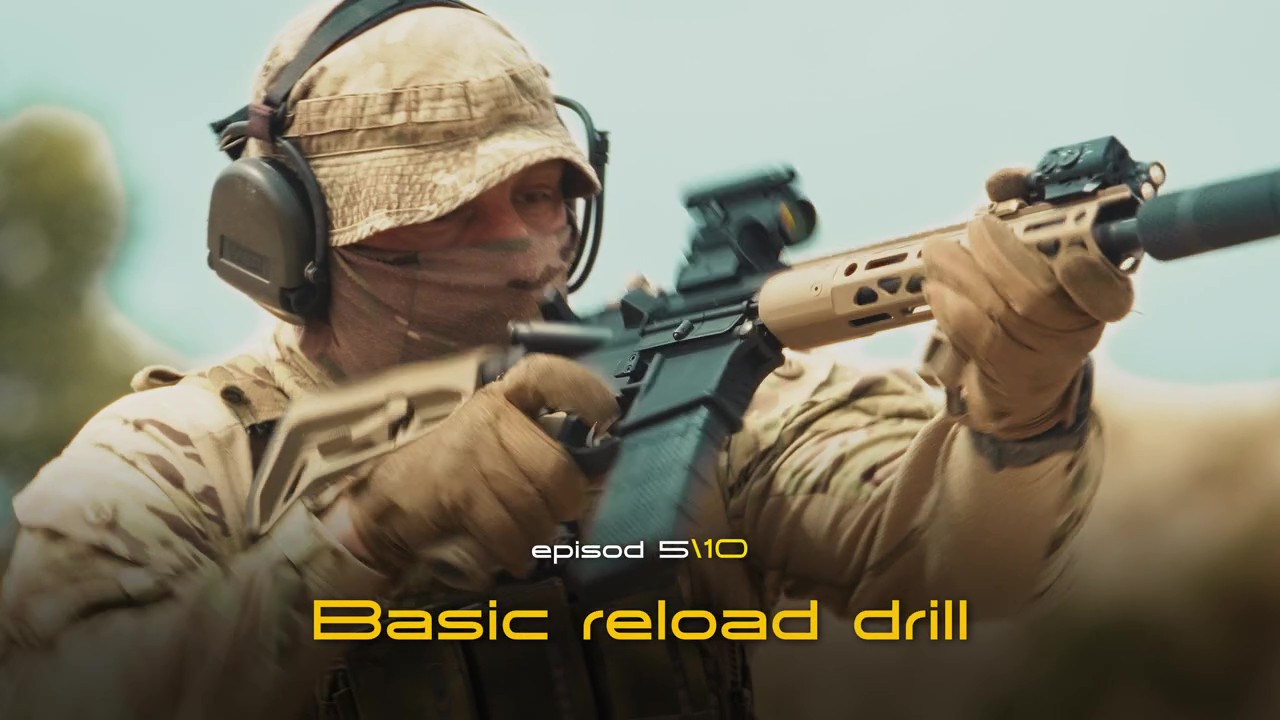
In this episode, I’ll walk you through the core skills for mastering weapon handling during combat manipulation. We’ll focus on two critical reloading techniques: emergency and tactical reloads. You’ll learn how to read the situation when your magazine runs dry, how to react during malfunctions, and how to train these actions through realistic drills. I’ll explain why stability, control, and safety outweigh raw speed. You'll begin to think like a marksman who knows that every movement counts.
6.6 Basic Malfunctions Drill
In this final preparatory session, the instructor presents the "Basic Malfunction Drill" — a fundamental exercise for developing reflexive malfunction-clearing skills. You'll learn why action always beats reaction and how this concept plays a crucial role in real-world engagements. The drill is designed so that malfunctions occur unpredictably, revealing the true level of your automated response. The instructor breaks down the "tap–rack–bang" method and emphasizes the importance of a follow-up shot after clearing a malfunction. You'll also gain insights on how to train subconscious actions for rapid control recovery, how to use dummy rounds effectively, and how to evaluate your accuracy during the exercise.
6.7 Drill: Fire Ship Drill
In this segment, the instructor presents the comprehensive "Fire Ship Drill," integrating all three types of fire maneuver: changing direction, depth, and shooting tempo. You will learn how to effectively transition between targets placed at 5, 25, and 100 meters, adapting your tempo accordingly — from controlled pairs to rapid bursts and precise long-distance shots. The drill uses 18 rounds across 3 cycles, starting from different ready positions (High Ready, Low Ready, Depressed Muzzle). The focus is on mastering controlled fire under dynamic conditions. This is more than just technique — it’s applied combat thinking.
6.8 Shooting on the Move "Walker Drill"
In this episode, I’ll guide you through mastering one of the most demanding yet essential skills for a modern shooter — shooting on the move. You’ll learn how to stay accurate and stable while changing positions or directions. I explain how to fire using three primary tempos: “step-fire,” “every-step fire,” and “independent-of-steps fire,” applying them in a practical exercise called the “Walker Drill.” This training will teach you to control your body and weapon while moving through open terrain or urban environments.
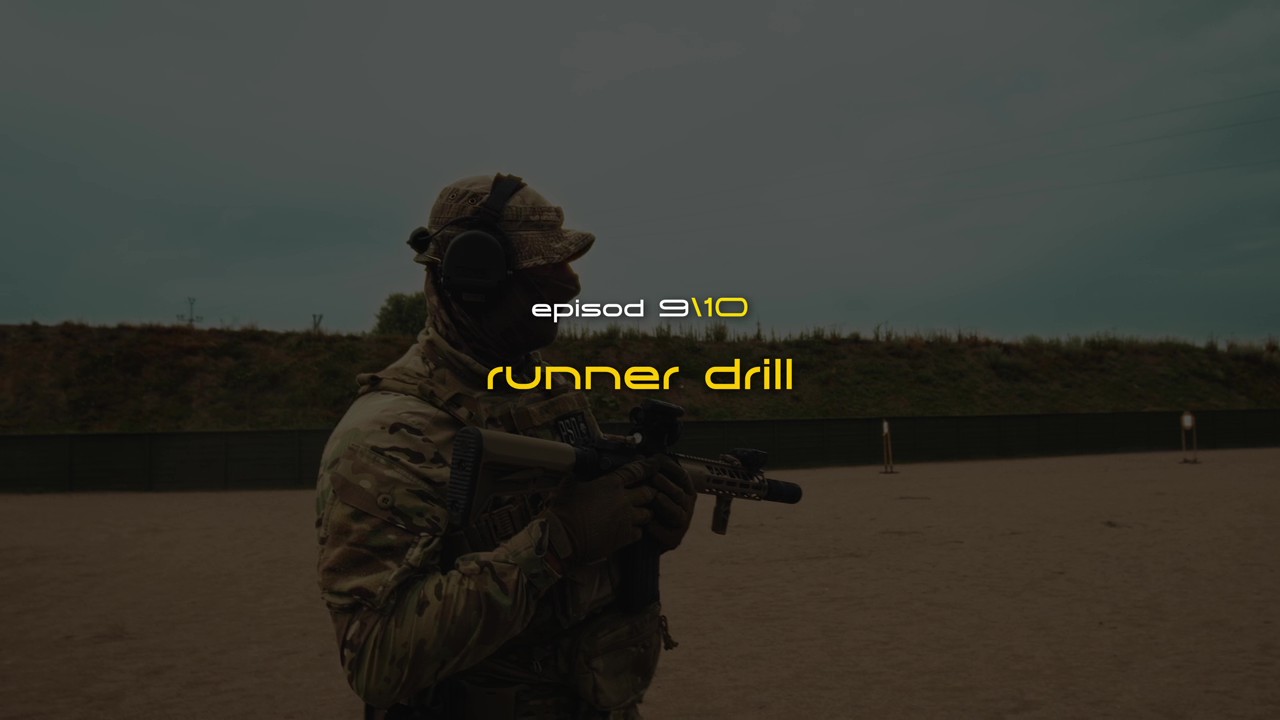
6.9 Running Entry Positions (Runner Drill)
In this episode, I’ll walk you through a series of drills that replicate the intensity of real combat. We’ll focus on movement under fire, transitioning between positions, and reacting to changing threats. You’ll learn how to effectively combine mobility and marksmanship, improve both stability and speed, and engage targets at mid to long range. The final drill — the Runner Drill — will test your physical and technical limits: short sprints, tactical drops, target acquisition, and precision shooting. This is a real test of a shooter’s combat readiness.
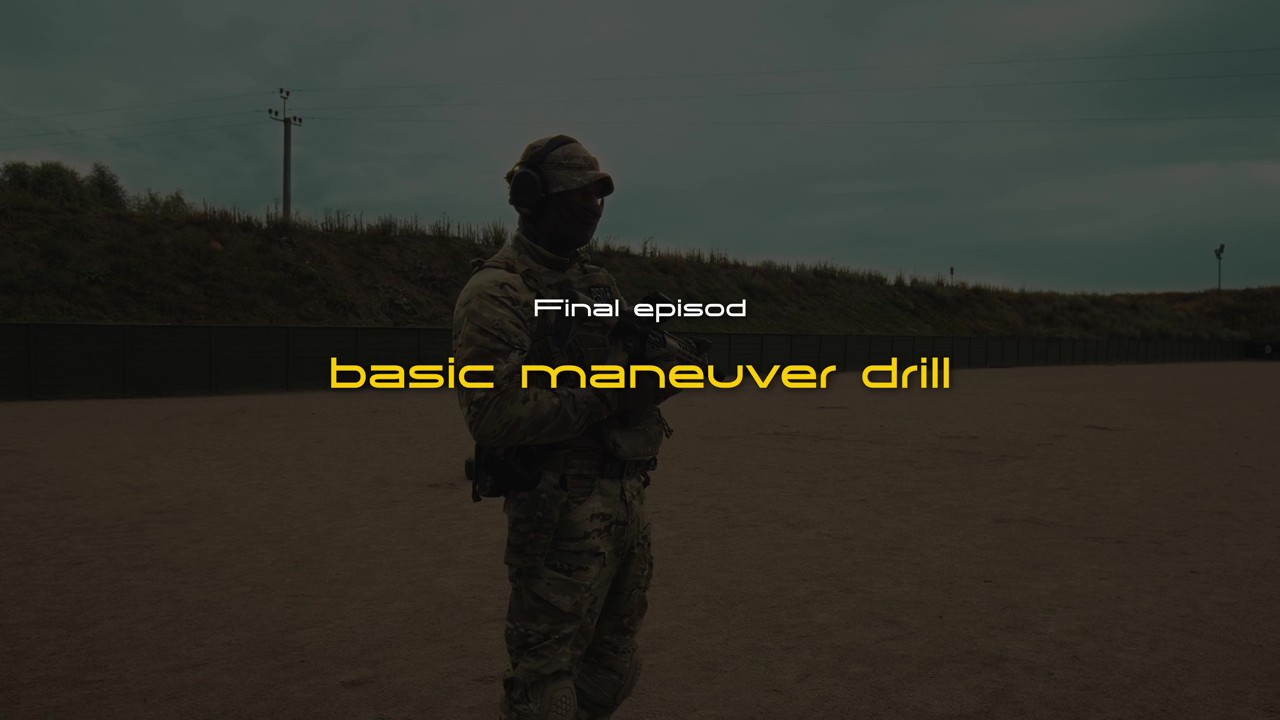
6.10 Fundamental Drill – Basic Maneuver Drill
In this episode, I’ll show you drills designed to test and enhance your endurance as a shooter. We’ll work on maintaining accuracy under psychological and physical stress, shoot from multiple positions, while on the move, and with minimal reaction time. You’ll see what a comprehensive maneuver drill looks like, and I’ll give you practical instructions to improve on your own. Remember — endurance is not just about the body, it’s about staying effective even when you're at your limit.